
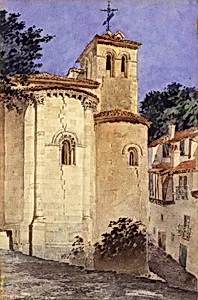
Church at Segovia, Spain
1920
Medium
Painting
Classification
Painting
Department
Smithsonian Collection
Museum
Smithsonian American Art Museum
Credit
Smithsonian American Art Museum, Bequest of Emily Finch Gilbert through Julia Post Bastedo, executor
Accession Number
1962.13.50
Rights
Public Domain
Art Historical Context
Nestled in the Smithsonian American Art Museum's collection *Church at Segovia,* (1920) is a painting by Cass Gilbert, the renowned American architect behind iconic structures like New York City's Woolworth Building. Created during a period of transatlantic cultural exchange in the early 20th century, work captures the timeless grandeur of Segovia's historic architecture—likely a Gothic or Romanesque church amid Spain's rugged landscapes. Gilbert, known for his Beaux-Arts precision, turned his architect's eye to canvas, blending his professional fascination with European heritage and personal travels. As a painting in oil or similar medium, it exemplifies the era's interest in architectural realism, where artists documented vanishing traditions amid modernization. Gilbert's composition highlights structural details—the soaring spires, intricate stonework, and play of light—that reflect his expertise in design, offering viewers a window into Spain's medieval legacy through an American lens. This piece, bequeathed by Emily Finch Gilbert via executor Julia Post Bastedo, underscores family ties to artistic patronage. Today, it invites museum-goers to ponder how travel inspired early modern creators, bridging continents and centuries in a single frame. A testament to Gilbert's multifaceted talent, it celebrates enduring beauty in stone and pigment.