
Cimon and Pero
c. 1635
Medium
oil on canvas
Dimensions
188.8; 11.5; 156.4
Rights
Public Domain
About this artwork
buitenmaat: diepte 11,5 cm (drager incl. SK-L-4769)
Art Historical Context
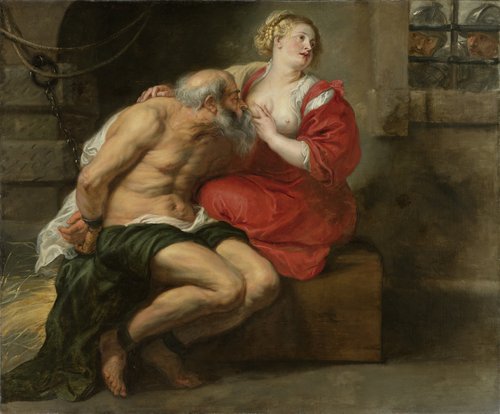
Peter Paul Rubens’s *Cimon and Pero* (c. 1635) captures the ancient Roman story of filial devotion known as “Roman Charity.” In the dramatic scene, Pero secretly breastfeeds her starving father Cimon, who has been imprisoned and sentenced to death. Rubens, the leading Flemish painter of the Baroque era, transforms this tale of compassion into a powerful study of human tenderness amid suffering. Painted in rich oil on canvas, the large work (156.4 × 188.8 cm) showcases Rubens’s characteristic vitality: luminous flesh tones, flowing drapery, and a dynamic interplay of light and shadow that heightens the emotional intensity. The Baroque style, with its emphasis on movement and sensuality, allows viewers to feel both the physical urgency and the moral nobility of Pero’s act. Housed in the Rijksmuseum, the painting reflects seventeenth-century interest in classical virtue and the enduring theme of self-sacrifice, inviting visitors to consider the timeless bonds between parent and child.
About the Artist
Peter Paul Rubens · 1577–1640
Peter Paul Rubens (1577-1640) stands as the most influential artist of the Flemish Baroque tradition and the greatest exponent of Baroque painting's dynamism, vitality, and sensuous exuberance. Born in Siegen, Westphalia, and raised in Antwerp, Rubens received a humanist education studying Latin and classical literature before pursuing artistic training under three masters: Tobias Verhaecht, Adam ...