
Clarinet in C
Unknown Artist
second half of 18th century
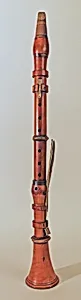
Medium
Boxwood, brass, horn
Dimensions
Total length: 586 mm., Bell diameter: 75 mm., Mouthpiece length: 86 mm., Barrel length: 48 mm., Upper midjoint length: 292 mm., Lower midjoint length: 138 mm., Bell length: 110 mm. Bore: c-hole 9.8; f-hole 10.0
Classification
Aerophone-Reed Vibrated-single reed cylindrical
Culture
probably German
Department
Musical Instruments
Museum
Metropolitan Museum of Art, New York, NY
Credit
The Crosby Brown Collection of Musical Instruments, 1889
Accession Number
89.4.900
Rights
Public Domain
Art Historical Context
This elegant Clarinet in C, by an unknown maker in the second half of 18th century, the refined woodwind instruments emerging in Europe during the Classical era. Likely of German origin, it measures 586 mm in total and disassembles into five sections: a mouthpiece (86 mm), barrel (48 mm upper midjoint (292), lower midjoint ( mm), and bell ( mm with a 75 mm diameter). Its cylindrical bore, varying slightly from 9.8 mm at the c-hole to .0 mm at the f-hole, is characteristic of single-reed aerophones, producing a clear, versatile tone suited for orchestral and chamber music. Fashioned from boxwood—a dense, resonant wood prized for its warm sound—with brass and horn fittings, this clarinet reflects 18th-century luthiers' mastery of combining natural materials for both acoustic precision and aesthetic appeal. Boxwood's stability allowed for intricate keywork, while horn added durability to mounts. By the late 1700s, such instruments were staples in ensembles, evolving from earlier chalumeaus and influencing composers like Mozart. Housed in the Metropolitan Museum of Art's Musical Instruments Department as part of the Crosby Brown Collection (acquired 1889), this piece offers a tangible link to Enlightenment-era music-making, inviting visitors to imagine its vibrant timbre echoing through candlelit concert halls.