
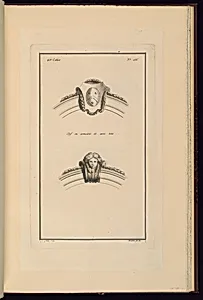
Clef en armoirie et avec tete
Classification
Department
Smithsonian Collection
Museum
Smithsonian American Art Museum
Credit
Purchased for the Museum by the Advisory Council
Accession Number
1921-6-254-60
Rights
Public Domain
About this artwork
Research in Progress
Art Historical Context
Juste-François Boucher (6–1782), son of the renowned Rococo painter François Boucher was a skilled French engraver whose intricate prints captured the ornate elegance of 18th-century arts. Created around 1775, *Clef en armoirie et avec tête*—translating to "Key in Heraldry and with Head"—depicts a symbolic key featured in coat-of-arms designs, blending utility with noble symbolism. As a print in the Smithsonian American Art Museum collection, it reflects the era's fascination with heraldry, where keys often represented authority, access to sacred spaces, or guardianship in aristocratic emblems. Though the exact medium remains under research, Boucher's expertise in engraving likely produced fine lines and detailed textures, ideal for reproducing such emblematic motifs. This work embodies the transitional Rococo style of late Louis XV France—playful yet refined—before Neoclassicism's rise. Acquired through the museum's Advisory Council, it highlights cross-Atlantic appreciation for European craftsmanship. Imagine unlocking history with this delicate print: keys in armoiries evoked power and prestige, from medieval castles to Versailles' grandeur. A charming glimpse into Enlightenment-era symbolism!