
Clock
19th century
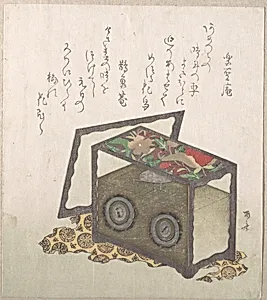
Medium
Part of an album of woodblock prints (surimono); ink and color on paper
Dimensions
8 1/2 x 7 1/2 in. (21.6 x 19.1 cm)
Classification
Prints
Culture
Japan
Department
Asian Art
Museum
Metropolitan Museum of Art, New York, NY
Credit
H. O. Havemeyer Collection, Bequest of Mrs. H. O. Havemeyer, 1929
Accession Number
JP2388
Rights
Public Domain
Tags
Art Historical Context
Behold the delicate "Clock" by Ryūryūkyo Shinsai, a gem from early 19th-century Japan nestled in an album of surimono—luxurious, privately commissioned woodblock prints. Crafted with ink and color on paper, this intimate 8½ x 7½-inch work captures a harmonious blend of blooming flowers and an ornate clock, evoking the fleeting beauty of time amid nature's splendor. Shinsai, a master of the ukiyo-e tradition, infused his designs with poetic elegance, often blending everyday objects with floral motifs to delight elite patrons. Surimono like this one were artisanal treasures, produced in limited editions for New Year's greetings or poetry gatherings, showcasing virtuoso printing techniques such as subtle gradations (bokashi) and vibrant mica flecks for a shimmering effect. In Edo-period Japan (1603–1868), clocks symbolized Western influences trickling into isolationist society, yet Shinsai reframes it through a Japanese lens of transience (mono no aware), where flowers remind us of life's impermanence. Housed in the Metropolitan Museum of Art's Asian Art collection, gifted via the H. O. Havemeyer bequest in 1929, this print invites you to pause and ponder: in its quiet precision, time doesn't just tick—it blooms.
About the Artist
Ryūryūkyo Shinsai · 1799–1823
Ryūryūkyo Shinsai (柳々居辰斎), active from 1799 to 1823, was a prominent Japanese ukiyo-e printmaker based in Edo (modern Tokyo), renowned for his mastery of surimono—luxurious, privately commissioned woodblock prints produced for elite poetry circles and New Year's celebrations. He began his training under Tawaraya Sōri before becoming a student of the legendary Katsushika Hokusai, from whom he recei...