
Close Helmet
Unknown Artist
ca. 1550
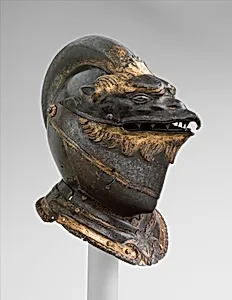
Medium
Steel, gold, silver
Dimensions
H. 11 3/4 in. (29.9 cm); W. 14 in. (35.6 cm); D. 14 in. (35.6 cm); Wt. 6 lb. 14 oz. (3128 g)
Classification
Helmets
Culture
Italian, Milan or Brescia
Department
Arms and Armor
Museum
Metropolitan Museum of Art, New York, NY
Credit
Fletcher Fund, 1929
Accession Number
29.17
Rights
Public Domain
Tags
Art Historical Context
This exquisite Close Helmet, crafted around 1550 in Milan or Brescia—Italy's premier armor-making centers—exemplifies the Renaissance fusion of warfare and artistry. During the mid-16th century, European knights faced evolving battlefield tactics with firearms and pikemen, close helmets evolved to fully enclose the wearer's head, offering maximum protection via articulated plates that sealed at the chin. Produced in these Lombard workshops, renowned for their technical precision, such helmets were worn by elite cavalry, blending lethal utility with opulent decoration to signify status. Forged from high-quality steel and embellished with gold and silver, this helmet showcases advanced metalworking techniques like embossing and gilding. The griffin motifs—mythical beasts symbolizing strength and vigilance—add a layer of heraldic symbolism, likely adorning the visor or brow plate to evoke classical mythology. Measuring about 12 inches high and weighing nearly 7 pounds, it was designed for prolonged combat while allowing ventilation and vision through strategically placed slits and pivots. Today, gifted to The Metropolitan Museum of Art via the Fletcher Fund in 1929, this helmet invites us to marvel at the armorer's skill: a testament to Italy's dominance in arms production during an era when armor was both shield and sculpture.