
Coat of Arms
Unknown Artist
Late 13th or Early 14th century
Medium
Stone
Dimensions
Overall: 14 1/4 x 3 3/8 x 11 3/4 in. (36.2 x 8.6 x 29.8 cm)
Classification
Sculpture-Architectural
Culture
French
Department
The Cloisters
Museum
Metropolitan Museum of Art, New York, NY
Credit
The Cloisters Collection, 1925
Accession Number
25.120.126
Rights
Public Domain
Tags
Art Historical Context
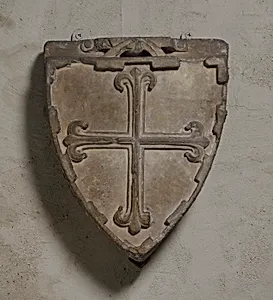
This modest yet evocative stone *Coat of Arms*, in late 13th- or early 14th France, exemplifies the architectural sculpture of the Gothic era. Measuring just a foot tall, its compact form—likely shaped as a shield or escutcheon—once adorned a medieval building, perhaps a church, castle, or noble residence. The central motif of a cross, rendered with crisp, angular lines typical of stone masonry, signals heraldic symbolism, a burgeoning system in medieval Europe used to identify knights, families, and religious orders amid the chaos of tournaments and Crusades. Heraldry's rise during this period marked a shift toward personal and institutional identity, with stone carvings like this providing durable public displays of lineage or allegiance. Crafted from durable stone, the piece showcases the era's masons' skill in low-relief carving, balancing intricate detail with structural resilience for outdoor exposure. Its presence in The Cloisters Collection at the Metropolitan Museum of Art transports visitors to the heart of feudal France, where symbols of faith and chivalry intertwined. Though the artist remains unknown, this artifact whispers of a vibrant world of Gothic ambition, inviting us to ponder the stories etched into its weathered surface. (198 words)