
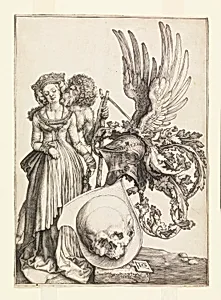
Coat of Arms of Vanitas
Medium
figures
Classification
figures
Department
Smithsonian Collection
Museum
Smithsonian American Art Museum
Credit
Gift of Leo Wallerstein
Accession Number
1951-37-2
Rights
Public Domain
About this artwork
Research in Progress
Art Historical Context
Albrecht Dürer (1–1528), a pioneering German artist of the Northern Renaissance, crafted *Coat of Arms ofitas* in 1503. Renowned for his revolutionary printmaking techniques, Dürer bridged Italian Renaissance ideals with Northern precision, producing works of extraordinary detail that influenced generations. This piece, classified as figures and housed in the Smithsonian American Art's Smithsonian Collection (gift of Leo Wallerstein), exemplifies his era's blend of heraldry and symbolism. The title *Coat of Arms ofitas* points to the vanitas tradition, a cultural motif popular in early 16th-century Northern Europe, urging reflection on life's transience through emblems of mortality. Dürer's mastery likely shines in its intricate composition, where heraldic pride confronts human fragility—a poignant commentary amid the Renaissance's humanistic fervor. Though research continues, the work underscores his technical brilliance and philosophical depth. Visitors to this virtual gallery will appreciate how Dürer's vision endures, inviting us to contemplate vanity and legacy through one timeless image.