
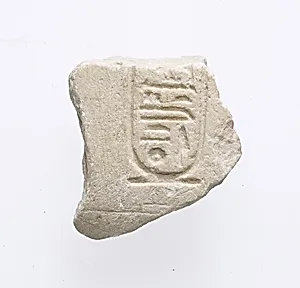
Cobra, Hood (?), Aten cartouche
Unknown Artist
ca. 1353–1336 B.C.
Medium
Limestone
Dimensions
H. 3 × W. 3.3 × D. 2.1 cm (1 3/16 × 1 5/16 × 13/16 in.); tenon 0.9 x 0.9 cm; cartouche W. 1.3 cm
Classification
Cobra, Hood (?), Aten cartouche
Period
New Kingdom, Amarna Period
Department
Egyptian Art
Museum
Metropolitan Museum of Art, New York, NY
Credit
Harris Brisbane Dick Fund, 1957
Accession Number
57.180.32
Rights
Public Domain
Art Historical Context
This petite limestone sculpture, titled *Cobra, Hood (?), Aten cartouche*, hails from Egypt's New Kingdom, specifically the revolutionary Amarna Period (ca 1353–1336 B.C.) during Dynasty 18. Carved to just 3 cm high, it features a coiled cobra—likely a uraeus, the rearing serpent emblem of divine protection for pharaohs—with its hood possibly flared, alongside the oval cartouche enclosing the name of Aten, the sun disk deity. The small tenon at its base suggests it was designed as an inlay or architectural element, perhaps adorning a temple wall or royal monument. The Amarna Period, under Pharaoh Akhenaten, marked a dramatic shift in Egyptian art and religion, emphasizing the exclusive worship of Aten in a near-monotheistic cult. This piece exemplifies that era's hieroglyphic precision and symbolic intensity: the cartouche, a royal name enclosure, underscores Aten's elevated status, while the cobra evokes Wadjet, the protective goddess intertwined with kingship. Limestone, a common yet durable medium, allowed for fine detailing in such miniature works, blending functionality with sacred iconography. Though its exact provenance is unknown, this artifact from the Metropolitan Museum of Art illuminates the fervent religious reforms of Akhenaten's court, where art served propaganda and piety. Visitors, imagine it gleaming in a sunlit temple, guarding the divine light of Aten!