
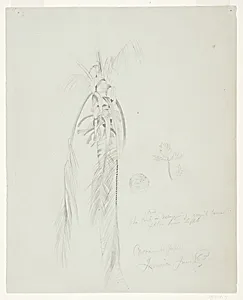
Coconut Palm, Jamaica
Medium
nature studies
Classification
nature studies
Department
Smithsonian Collection
Museum
Smithsonian American Art Museum
Credit
Gift of Louis P. Church
Accession Number
1917-4-5
Rights
Public Domain
About this artwork
Research in Progress
Art Historical Context
**Coconut Palm, Jamaica Frederic Edwin Church, 1826–1900Step into the lush tropics with Frederic Edwin Church's *Coconut Palm,*, a delicate nature study completed in June 1865. This intimate work captures the majestic form of a single coconut palm, rendered during Church's travels to the Caribbean island. As a leading figure of the Hudson River School, was renowned for his precise observations of the natural world, blending Romantic idealism with scientific accuracy. His nature studies, like this one, served as vital sketches—often in oil, pencil, or watercolor—fueling grand landscape paintings that celebrated America's wilderness and exotic locales. Created amid the tumult of the post-Civil War era, the piece reflects Church's quest for inspiration and healing after personal tragedies, including the loss of two children. Jamaica's vibrant flora offered a vivid contrast to his Hudson Valley roots, influencing later masterpieces like *Morning in the Tropics*. Housed in the Smithsonian American Art Museum through a gift from Louis P. Church, this study showcases Church's masterful technique: meticulous detailing of leaf textures, trunk curves, and light play, underscoring his role in elevating American landscape art. Today, *Coconut Palm, Jamaica* invites us to appreciate the quiet power of observation, bridging 19th-century exploration with enduring environmental wonder. (198 words)