
Coffee cup (part of a service)
ca. 1760
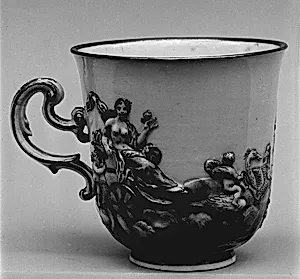
Medium
Hard-paste porcelain
Dimensions
H. 3 in. (7.6 cm.); Diam. 2 7/8 in. (7.3 cm.)
Classification
Ceramics-Porcelain
Culture
Italian, Florence
Department
European Sculpture and Decorative Arts
Museum
Metropolitan Museum of Art, New York, NY
Credit
Gift of George F. Baker, 1931
Accession Number
31.132.5
Rights
Public Domain
Tags
Art Historical Context
This elegant coffee cup, created around 1760 by the Doccia Porcelain Manufactory in Florence, exemplifies the refined taste of 18th-century European tableware. As part of a larger service, it reflects the growing fashion for porcelain coffee and tea sets among the Italian aristocracy. The small scale—standing just three inches high—highlights the intimate, personal nature of such objects, designed for daily rituals yet crafted with artistic care. Made of hard-paste porcelain, the cup demonstrates the technical achievements of Italian ceramic production during this period. This durable material, prized for its translucency and strength, allowed for delicate forms and intricate surface decoration. The vessel features charming motifs of female nudes, putti, and swans, evoking classical mythology and Rococo playfulness that were popular in decorative arts of the time. Housed in the Metropolitan Museum of Art’s collection of European Sculpture and Decorative Arts, this piece offers visitors a glimpse into Florence’s vibrant artistic heritage and the era’s blend of utility and beauty. Its gift to the museum in 1931 underscores its enduring appeal as both a functional object and a work of art.
About the Artist
Doccia Porcelain Manufactory · 1737–1896
The Doccia Porcelain Manufactory, founded in 1737 by Marquis Carlo Ginori near Florence, holds the distinction of being Italy's first hard-paste porcelain manufacturer and one of the few European porcelain enterprises to survive from the eighteenth century to the present day without interruption. Unlike most contemporary ventures — which depended on the patronage and protection of ruling courts — ...