
Coffee Pot
Unknown Artist
probably 19th century
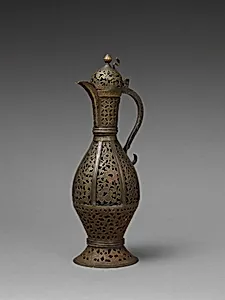
Medium
Copper
Dimensions
H. 12 13/16 in. (32.5 cm) W. 5 7/16 in. (13.8 cm) Diam. 4 1/16 in. (10.3 cm) Wt. 20.7 oz. (586.901 g)
Classification
Metal
Department
Islamic Art
Museum
Metropolitan Museum of Art, New York, NY
Credit
Edward C. Moore Collection, Bequest of Edward C. Moore, 1891
Accession Number
91.1.566
Rights
Public Domain
Art Historical Context
This elegant copper coffee pot, likely crafted in the 19th century, exemplifies the refined metalworking traditions of the Islamic world. Standing at 12 13/16 inches tall with a slender profile (5 7/16 inches wide and 4 1/16 inches in diameter), it weighs a substantial 20.7 ounces, reflecting its sturdy construction for practical use. As part of the Metropolitan Museum of Art's Islamic Art collection, it entered the museum through the generous bequest of Edward C. Moore in 1891, highlighting the era's fascination with Eastern craftsmanship among Western collectors. In Islamic culture, coffee pots like this were essential for serving strong, aromatic Turkish coffee, a ritual that fostered social bonds in homes, coffeehouses, and ceremonies. Copper was a favored medium for such vessels due to its excellent heat conductivity and malleability, allowing artisans to hammer intricate shapes while ensuring durability over generations. Though the artist remains unknown, the pot's form speaks to widespread Ottoman or regional influences, where metalwork blended utility with subtle aesthetic appeal. Today, this unassuming yet sophisticated piece invites us to savor the everyday artistry of Islamic life, reminding visitors of coffee's enduring role as a bridge between cultures.