
Ewer
Unknown Artist
second half 13th century
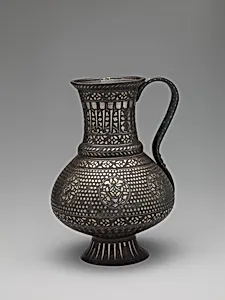
Medium
Bronze; cast with handle cast separately, chased, engraved, inlaid with silver and gold
Dimensions
H. 8 9/16 in. (21.7 cm) W. 6 1/2 in. (16.5 cm) D. 6 in. (15.2 cm) Wt. 40.9 oz. (1159.6 g)
Classification
Metal
Department
Islamic Art
Museum
Metropolitan Museum of Art, New York, NY
Credit
Purchase, Joseph Pulitzer Bequest, 1963
Accession Number
63.158.3
Rights
Public Domain
Art Historical Context
This elegant bronze ewer, crafted by an unknown artist in the half of the 13 century, exemplifies the pinnacle of Islamic metalworking artistry. Standing just over 8 inches tall with a sturdy 40.9-ounce weight, it a separately cast handle and a pear-shaped body designed for gracefully pouring water—likely for ritual ablutions or serving at lavish banquets in the medieval Islamic world. Housed in the Metropolitan Museum of Art's Art Department, it was acquired through the Joseph Pulitzer Bequest 1963. The ewers's surface dazzles with intricate chased and engraved designs, enhanced by luxurious silver and gold inlays that catch the light, creating a shimmering interplay of textures and tones. These techniques—casting, chasing (hammering fine details into the metal), engraving, and inlaying—highlight the technical virtuosity of artisans during this era, possibly in regions like Syria or Egypt under Ayyubid or early Mamluk patronage. Such metal vessels were status symbols, blending functionality with opulent decoration inspired by courtly tastes. In Islamic culture, ewers like this held both practical and symbolic value, facilitating cleanliness central to daily life and religious practice. Its survival offers a window into a golden age of craftsmanship, where everyday objects became canvases for artistic excellence.