
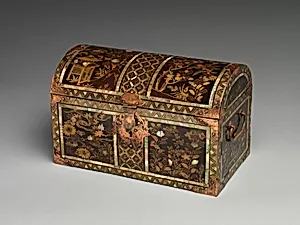
Coffer in Nanban (Southern Barbarian) Style
Unknown Artist
ca. 1600–30
Medium
Gold maki-e and mother-of-pearl inlay on black lacquer; gilt-bronze fittings
Dimensions
H. 8 7/8 in. (22.5 cm); W. 14 in. (35.6 cm); D. 7 1/2 in. (19.1 cm)
Classification
Lacquer
Culture & Period
Japan · Momoyama period (1573–1615)
Department
Asian Art
Museum
Metropolitan Museum of Art, New York, NY
Credit
Gift of Florence and Herbert Irving, 2015
Accession Number
2015.500.2.30
Rights
Public Domain
Tags
Art Historical Context
This exquisite coffer, crafted in the distinctive Nanban ("Southern Barbarian") style around 1600–30, exemplifies the fusion of Japanese artistry with European influences during Japan's early global encounters. The chest, measuring about 9 inches high and inches wide, features a black lacquer foundation adorned with intricate gold *maki-e*—a technique where fine gold powder is sprinkled onto wet lacquer to create shimmering designs—and vibrant mother-of-pearl inlays depicting flowers and plants. Gilt-bronze fittings add a luxurious touch, making it both a functional storage piece and a display of opulence. Produced in the lavish Momoyama period (1573–1615), a time of political upheaval and cultural splendor, this coffer reflects the arrival of Portuguese traders in the late 16th century. Nanban style incorporated Western motifs and materials, blending them with Japan's masterful lacquer traditions. *Maki-e* and iridescent shell inlays were hallmarks of high-end Japanese export wares, symbolizing wealth and exotic allure for elite patrons or overseas markets. Today, housed in the Metropolitan Museum of Art's Asian Art Department as a gift from Florence and Herbert Irving, this coffer invites visitors to ponder Japan's brief but transformative "Southern Barbarian" phase, before sakoku (national seclusion) curtailed foreign trade. Its floral motifs evoke nature's enduring beauty amid cultural exchange.