
Coffin and Mummy of Paankhaenamun
Third Intermediate Period, Dynasty 22, reign of Osorkon I (about 924–889 BCE)
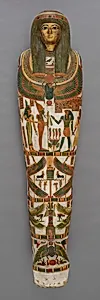
Medium
Cartonnage, gold leaf, pigment, and mummified human remains
Dimensions
170.2 × 43.2 × 31.7 cm (67 × 17 × 12 1/2 in.)
Classification
coffin
Department
Arts of Africa
Museum
Art Institute of Chicago
Accession Number
64339
Rights
Public Domain
About this artwork
Mummification is the ancient Egyptian funerary practice of drying out a corpse for preservation. Anointed with oils and spices and protected with amulets, this linen-wrapped body was placed in a series of nesting coffins; the vividly painted cartonnage was the innermost shell. Across the surface of the mummy case, inscriptions and painted scenes and symbols identify the deceased—Paankhaenamun—and proclaim his wish to live well in the afterlife. Another inscription records that he was the doorkee...
About the Artist
Ancient Egyptian
Ancient Egyptian artists, a collective of highly skilled artisans spanning over three millennia from the Predynastic period (c. 6000–3150 BC) to the Roman era (30 BC–4th century AD), produced some of humanity's most enduring masterpieces. These anonymous craftsmen, often organized in state-sponsored workshops, lived in dedicated communities like Deir el-Medina near Luxor during the New Kingdom (c....