
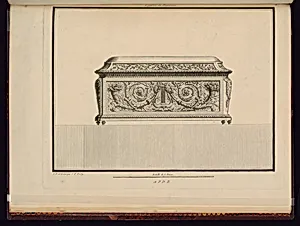
Coffre à Bijoux
Classification
Department
Smithsonian Collection
Museum
Smithsonian American Art Museum
Credit
Purchased for the Museum by the Advisory Council
Accession Number
1921-6-310-51
Rights
Public Domain
About this artwork
Research in Progress
Art Historical Context
**Coffre à Bijoux** (*Jewelry Box*), a print created by Jean François Forty between 1774 and 1788, captures the elegance of late 18th-century European decorative arts. Active from 1775 to 1790, Forty was part of a vibrant printmaking tradition during the waning years of the French Rococo and the rise of Neoclassicism. This period saw opulent luxury items like jewelry boxes as symbols of wealth and refinement among the aristocracy, just before the upheavals of the French. As a print—though its specific technique remains under study—this work likely served as a design template or reproductive illustration, a common practice for disseminating intricate furniture and object motifs to artisans across Europe and beyond. Such prints bridged fine art and craft, influencing cabinetmakers and jewelers by showcasing detailed engravings of ornate cases adorned with marquetry, gilt metal, or exotic woods. Acquired by the Smithsonian American Art Museum through the Advisory Council, *Coffre à Bijoux* highlights transatlantic exchanges in design during America's early republic era. Ongoing research promises deeper insights into Forty's oeuvre and this piece's role in preserving 18th-century aesthetic ideals for modern audiences.