
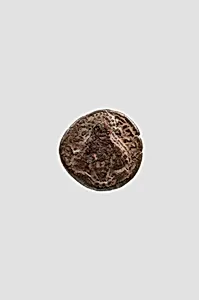
Coin, 1/6 unit
Unknown Artist
ca. 224–41 CE
Medium
Bronze
Dimensions
11/16 in. (1.7 cm)
Classification
Metalwork-Coins-Inscribed
Culture & Period
Sasanian · Sasanian
Department
Ancient Near Eastern Art
Museum
Metropolitan Museum of Art, New York, NY
Credit
Rogers Fund, 1936
Accession Number
36.30.301
Rights
Public Domain
Art Historical Context
This petite bronze coin, measuring just 11/16 inch (1.7 cm) in diameter, represents a1/6 fractional unit from the early Sasanian Empire (. 224–41 CE), a powerhouse that stretched across ancient Persia and Mesopotamia. Minted during the reign's formative years—likely under founder Ardashir I—this inscribed metalwork exemplifies the Sasanians' revival of Persian imperial traditions after the Parthian era, blending artistry with economic might. Sasanian coins were more than currency; they served as royal propaganda, often featuring the king's bust on one side and a fire altar symbolizing Zoroastrian faith on the other, accompanied by Pahlavi script denoting value and ruler. Crafted in bronze for everyday transactions, this tiny piece highlights advanced die-striiking techniques that ensured sharp, legible inscriptions despite its modest size. Its survival offers a window into daily life in a culturally vibrant empire known for grand rock reliefs and silver plate. Acquired through the Rogers Fund in 1936, this artifact now graces the Metropolitan Museum of Art's Ancient Near Eastern Art department, reminding us how even small objects encapsulate a civilization's aspirations and piety.