
Coin
Unknown Artist
dated A.H. 1181/ 1767–68 CE
Dimensions
Diam. 1 7/16 in. (3.6 cm) Th. 1/8 in. (0.3 cm) Wt. 276 gr. (17.884g)
Classification
Coins
Department
Islamic Art
Museum
Metropolitan Museum of Art, New York, NY
Credit
Bequest of Joseph H. Durkee, 1898
Accession Number
99.35.2378
Rights
Public Domain
Art Historical Context
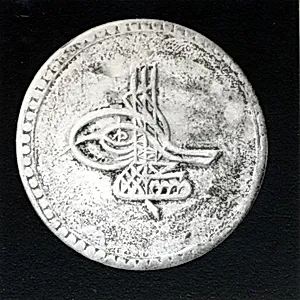
This elegant coin, minted in A.H. 1181 (1767–68 CE), offers a tangible glimpse into the vibrant Islamic world of the late 18th century. As a numismatic artifact from the Metropolitan Museum of Art's Islamic department, it exemplifies how coins served not just as currency but as historical documents, often inscribed with dates, rulers' names, intricate Arabic calligraphy to convey authority and faith. During this period, Islamic empires like the Ottoman realm were at their zenith, with coinage reflecting economic prowess and cultural refinement across vast trade networks from the Mediterranean to India. Measuring just 1 7/16 inches (3.6 cm) in diameter and weighing a substantial 17.884 grams, this coin's modest thickness of 1/8 inch (0.3 cm) belies its enduring craftsmanship. Likely struck in silver or a similar alloy—common for the era—its design prioritized legibility and symbolism over figurative imagery, adhering to Islamic artistic traditions that favored abstract beauty and script. Such coins circulated in bustling bazaars, funding everything from grand mosques to everyday transactions. Bequeathed to the Met in 1898 by Joseph H. Durkee, this piece invites visitors to ponder the hands that once held it: merchants, sultans, pilgrims. In our virtual gallery, it reminds us how tiny objects bridge centuries, whispering stories of a global Islamic heritage.