
Coin
Unknown Artist
dated A.H. 340/ 951 CE
Medium
Silver
Classification
Coins
Department
Islamic Art
Museum
Metropolitan Museum of Art, New York, NY
Credit
Rogers Fund, 1939
Accession Number
39.40.127.118
Rights
Public Domain
Art Historical Context
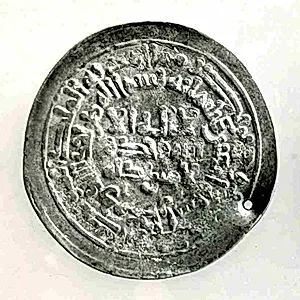
This exquisite silver coin, struck in A.H. 340 (951 CE), offers a tangible glimpse into the vibrant Islamic world of the 10th century. As a product of the Abbasid era or its regional successors, it exemplifies the dirham—a standard silver currency that facilitated trade across vast empires from Spain to Central Asia. Minted with precision, its surface likely bears intricate Arabic inscriptions, including the date, ruler's name, and mint location, reflecting the era's emphasis on epigraphy as both artistic and administrative tool. In the Department of Islamic Art, this coin highlights the fusion of functionality and aesthetics in medieval Islamic numismatics. Silver, valued for its durability and purity, was hammered or cast into thin planchets, then engraved using fine punches to create legible, ornamental script. Such techniques not only ensured economic circulation but also served as portable propaganda, proclaiming caliphal authority and Islamic piety. Acquired through the Rogers Fund in 1939, this unassuming artifact at the Metropolitan Museum of Art underscores how coins preserve history: recording political shifts, economic vitality, and cultural sophistication of a golden age. Visitors, imagine it jingling in a merchant's pouch along the Silk Road— a small silver witness to an interconnected world.