
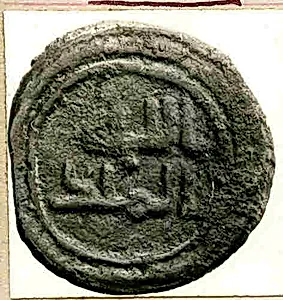
Coin
Unknown Artist
probably 8th century
Medium
Copper
Classification
Coins
Department
Islamic Art
Museum
Metropolitan Museum of Art, New York, NY
Credit
Rogers Fund, 1939
Accession Number
39.40.127.310
Rights
Public Domain
Art Historical Context
This unassuming copper coin, dating to the 8th century, offers a tangible glimpse into the vibrant world of early Islamic civilization. Housed in the Metropolitan Museum of Art's Islamic Art department (acquired through the Rogers Fund in 1939), it the practical artistry of numismatics—coins that served as both currency and cultural messengers during the expansive Abbasid era or late Umayyad period. Crafted from copper, a common medium for everyday transactions known as *fals* in the Islamic world, this coin was likely struck using dies that impressed intricate Arabic inscriptions. These often included the ruler's name, mint location, and religious phrases like the Islamic confession of faith, reflecting the era's emphasis on calligraphy as a supreme art form. Unlike earlier Byzantine or Sasanian coins with figural imagery, Islamic coins pioneered an aniconic style, prioritizing script to convey authority, piety, and unity across a vast empire stretching from Spain to Central Asia. Beyond economics, such coins fueled trade along the Silk Road and Indian Ocean routes, symbolizing the Islamic golden age's intellectual and commercial prowess. Though the artist remains unknown, this small artifact whispers stories of artisans, merchants, and caliphs, inviting us to ponder the power of the pocket-sized in shaping history.