
Coin
Unknown Artist
probably 8th–9th century
Medium
Copper
Classification
Coins
Department
Islamic Art
Museum
Metropolitan Museum of Art, New York, NY
Credit
Rogers Fund, 1939
Accession Number
39.40.127.396
Rights
Public Domain
Art Historical Context
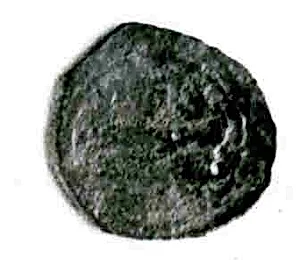
This copper coin, dating to the 8th–9th, hails from the vibrant era of the Abbasid Calate, a golden age of Islamic civilization centered in Baghdad. As a modest yet essential artifact in the Metropolitan Museum of Art's Islamic collection—acquired through the Rogers Fund in 1939—it exemplifies the standardized coinage that fueled the empire's vast trade networks from the Mediterranean to India. Crafted from copper, the everyday metal for smaller denominations known as *fals*, it circulated widely among merchants, farmers, and travelers, underscoring the caliphate's economic sophistication. Artistically, Islamic coins marked a revolutionary shift from Byzantine and Sasanian predecessors by embracing aniconism—eschewing human or animal figures in favor of elegant Arabic inscriptions. These often included the caliph's name, mint location (like Baghdad or Basra), and the Islamic date, rendered in Kufic script, an angular style that blended functionality with aesthetic grace. The coin's obverse and reverse designs promoted religious unity, bearing phrases like "There is no god but God" to affirm the faith's core tenets. Beyond commerce, such coins were cultural emissaries, spreading Islamic motifs and literacy across diverse regions. Handling one today evokes the hum of medieval souks and the ingenuity of a world where money itself became a canvas for devotion and power.