
Coin
Unknown Artist
770
Medium
Copper
Classification
Coins
Department
Islamic Art
Museum
Metropolitan Museum of Art, New York, NY
Credit
Rogers Fund, 1939
Accession Number
39.40.127.496
Rights
Public Domain
Art Historical Context
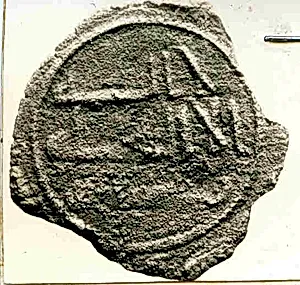
This copper coin, minted around 770 CE, offers a glimpse into the early Abbasid Caliphate, a golden age of Islamic civilization centered in newly founded Baghdad. As one of the first widespread currencies under Abbasid rule, it reflects the empire's economic vitality and administrative prowess, facilitating trade across vast territories from Spain to Central Asia. Produced during the reign of caliphs like al-Mansur or al-Mahdi, such coins transitioned from Byzantine and Sassanian influences toward purely Islamic designs, often featuring Arabic inscriptions rather than figural imagery to align with emerging aniconic traditions. Crafted through precise striking techniques on copper—a practical medium for everyday transactions—this numismatic artifact exemplifies the artistry of Islamic minting. Inscriptions likely proclaim the caliph's name, titles, and mint location, serving as both money and propaganda. Its survival highlights the durability of these small-scale masterpieces. Housed in the Metropolitan Museum of Art's Islamic Art department through the Rogers Fund of 1939, this unassuming coin connects visitors to the pulse of medieval Islamic society, where commerce intertwined with culture and faith. (178 words)