
Coin
Unknown Artist
8th–9th century
Medium
Copper
Classification
Coins
Department
Islamic Art
Museum
Metropolitan Museum of Art, New York, NY
Credit
Rogers Fund, 1939
Accession Number
39.40.127.561
Rights
Public Domain
Art Historical Context
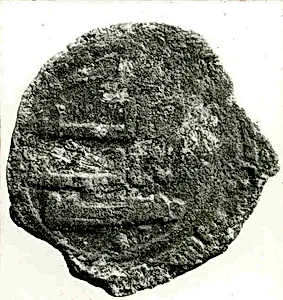
This unassuming copper coin, minted in the 8th–9th century offers a tangible glimpse into the vibrant world of early Islamic civilization. Housed in the Metropolitan Museum of Art's Islamic Department, it exemplifies the everyday currency that fueled trade across a vast empire stretching from Spain to Central Asia. Acquired through the Rogers Fund in 1939, such coins were essential for local commerce, contrasting with the more prestigious gold dinars and silver dirhams used in international exchange. Crafted from durable copper—a practical choice for frequent handling—the coin reflects sophisticated minting techniques of the era. Artisans struck designs using dies, often featuring Arabic inscriptions with the caliph's name, mint location, and date, adhering to Islamic aniconism by avoiding figural imagery. This shift from pre-Islamic Byzantine and Sasanian influences marked a cultural assertion of Islamic identity. Beyond economics, these coins were cultural ambassadors, spreading Arabic script and Islamic dates far and wide. They highlight how art in miniature form documented history, from the Umayyad to early Abbasid caliphates, making this modest artifact a portal to an era of intellectual and artistic flourishing.