
Coin
Unknown Artist
dated A.H. 386/ 996 CE
Medium
Copper
Classification
Coins
Department
Islamic Art
Museum
Metropolitan Museum of Art, New York, NY
Credit
Rogers Fund, 1939
Accession Number
39.40.127.540
Rights
Public Domain
Art Historical Context
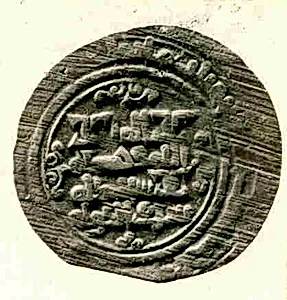
This copper coin, struck in A.H. 386 (996 CE), offers a tangible glimpse into the vibrant Islamic world of the late 10th century. a product of the Islamic Art tradition, it exemplifies the precision of numismatic craftsmanship during a time when Muslim empires spanned from Spain to Central Asia. The Hijri date etched on its surface anchors it firmly in the Islamic calendar, reflecting the era's sophisticated administrative systems under caliphates and regional dynasties. Crafted from copper—a common medium for everyday fulus (small denomination coins)—this piece served practical economic purposes while doubling as portable art. Islamic coins famously avoided figural imagery, favoring elegant Arabic inscriptions, geometric motifs, and precise epigraphy. These elements not only conveyed authority and legitimacy but also showcased the high level of metallurgical skill and calligraphic artistry prevalent in mints across the medieval Islamic realm. Held in the Metropolitan Museum of Art's collection through the Rogers Fund of 1939, this unassuming coin illuminates daily life, trade, and governance in a golden age of Islamic culture. For visitors, it's a reminder that even the smallest artifacts carry the weight of history.