
Coin
Unknown Artist
ca. 976–1034
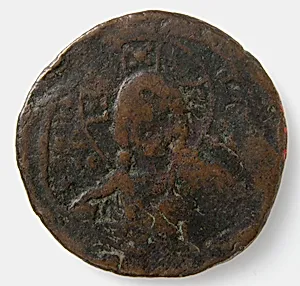
Medium
Copper alloy (bronze)
Dimensions
Overall: 1 5/16 x 1/16 in. (3.3 x 0.2 cm)
Classification
Coins
Culture
Byzantine
Department
Medieval Art
Museum
Metropolitan Museum of Art, New York, NY
Credit
Gift of Louis S. Levy, 1950
Accession Number
50.194.2
Rights
Public Domain
Art Historical Context
This modest bronze coin, struck in the Byzantine Empire around 976–1034, a tangible glimpse into the heart of medieval Mediterranean life. Minted during the Macedonian dynasty—a golden age of imperial expansion under rulers like Basil II—the coin widely as everyday currency in Constantinople and beyond. At just 3.3 cm in diameter and remarkably thin, it exemplifies the practical bronze alloys used for smaller denominations, contrasting with the empire's prestigious gold solidi reserved for high-value trade. Byzantine coins were more than money; they were imperial propaganda, often bearing portraits of emperors, saints, or victory symbols to assert divine authority and cultural continuity from Rome. Crafted via hammering between engraved dies, these pieces showcase fine metalworking techniques that balanced durability with intricate detailing, even on humble copper alloys. This example, now in the Metropolitan Museum of Art's Medieval Art collection (gift of Louis S. Levy, 1950), highlights the empire's sophisticated economy, fueling commerce across Europe, the Middle East, and beyond. Though anonymous in its maker, the coin embodies Byzantium's enduring artistic legacy—blending classical realism with Christian iconography in miniature form, a testament to an empire that bridged antiquity and the Middle Ages.