
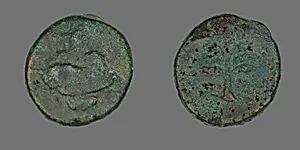
Coin Depicting Pegasus
about 400-310 BCE
Medium
Bronze
Dimensions
Diam.: 1.4 cm (9/16 in.)
Classification
coin
Department
Arts of Greece, Rome, and Byzantium
Museum
Art Institute of Chicago
Accession Number
142734
Rights
Public Domain
Art Historical Context
This petite bronze coin, struck around 400-310 BCE by Ancient Greek artisans, showcases the mythical winged horse Pegasus on its surface. Measuring just 1.4 cm in diameter, it exemplifies the remarkable precision of Classical Greek numismatics, where even tiny objects served as canvases for storytelling and civic pride. Housed in the Art Institute of Chicago Arts of Greece, Rome and Byzantium department, artifact bridges art, economics, and mythology. Pegasus, born from the blood of Medusa, symbolized poetic inspiration, heroism, and the city-state of Corinth, whose coins famously featured the creature as an emblem. Minted during a golden age of Greek city-state rivalries and cultural flourishing, such coins were more than currency—they propagated identity and power across the Mediterranean trade networks. Bronze issues like this one were common for everyday transactions, contrasting with grander silver staters. Artistically, the coin's incised details highlight Greek mastery of die-striiking techniques, capturing Pegasus's dynamic form in high relief despite the miniature scale. For visitors, it offers a tangible glimpse into daily life in ancient Hellas, where myth infused even pocket change with enduring wonder.
About the Artist
Ancient Greek
The artist known simply as "Ancient Greek" represents the anonymous masters of Attic vase painting, a cornerstone of Classical Greek art from the Archaic and Classical periods (circa 700–300 BCE). Little is known of their personal life, as ancient Greek potters and painters rarely signed their works or left biographical traces; early life and training remain not well documented. These creators ope...