
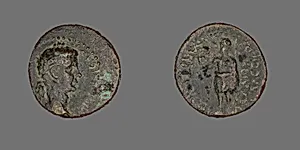
Coin Portraying Emperor Caligula
37-41
Medium
Bronze
Dimensions
Diam.: 2 cm (13/16 in.)
Classification
coin
Department
Arts of Greece, Rome, and Byzantium
Museum
Art Institute of Chicago
Accession Number
142933
Rights
Public Domain
About this artwork
The front (obverse) of this coin portrays Emperor Caligula while the back (reverse) depicts the God Zeus of Aezanis and an eagle.
Art Historical Context
This bronze coin, minted during the reign of Emperor Calig (37–41 AD), offers a fascinating glimpse into ancient Roman imperial propaganda. Gaius Julius Caesar Augustus Germanicus, known as Caligula, ruled amid controversy, marked by extravagance and reported tyranny, yet his image on currency like this 2 cm diameter piece—housed in the Art Institute of Chicago's Arts of Greece, Rome, and Byzantium department—served to legitimize his power across the vast empire. As a typical Roman bronze coin, it exemplifies the precision of ancient minting techniques, where dies struck intricate portraits and inscriptions into the metal for mass production. These small, durable artifacts circulated daily, making the emperor's visage familiar to soldiers, merchants, and citizens alike, blending artistry with political messaging in the tradition of Hellenistic and Roman numismatics. Though modest in size, this coin underscores Rome's cultural emphasis on visual authority, where even everyday money became a canvas for imperial divinity and continuity. A subtle survivor of history, it invites us to ponder the man behind the myth.
About the Artist
Ancient Roman
The artists attributed to "Ancient Roman" in museum collections represent the anonymous craftsmen who produced the vast output of sculpture, frescoes, mosaics, and reliefs defining Roman visual culture from the Republic (c. 509–27 BCE) to the late Empire (c. 395 CE). Individual identities remain elusive, as Roman makers were typically viewed as skilled tradesmen—often enslaved Greeks or provincial...