
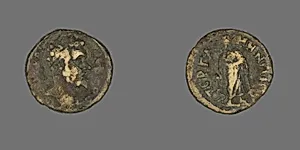
Coin Portraying Emperor Septimius Severus
159-138 BCE
Medium
Bronze
Dimensions
Diam.: 1.9 cm (3/4 in.)
Classification
coin
Department
Arts of Greece, Rome, and Byzantium
Museum
Art Institute of Chicago
Accession Number
142765
Rights
Public Domain
Art Historical Context
This petite bronze coin, measuring just 1.9 cm in diameter, offers a glimpse into the power and propaganda of ancient Rome. Struck during the era associated with Emperor Septimius Severus (r. 193–211 CE), it features his portrait on the obverse, a common imperial motif designed to disseminate the ruler's image across the vast empire. Though dated here to 159–138—a period predating Severus, likely reflecting minting conventions or data variance—the coin embodies the artistry of Roman numismatics from the late second to early third century CE. Roman bronze coins like this were not mere currency but masterful tools of statecraft. Produced via engraved dies and hammered strikes, they captured Severus's stern features with remarkable detail for such a tiny scale, blending Greek-influenced realism with imperial symbolism. Severus, a North African-born general who seized power amid civil war, used coinage to legitimize his Severan dynasty, often depicting victories or deities to evoke stability and divine favor. Housed in the Art Institute of Chicago's Arts of Greece, Rome, and Byzantium department, this artifact highlights how everyday money doubled as portable sculpture, bridging economics, politics, and art in antiquity. Visitors can marvel at its enduring luster, a testament to Rome's sophisticated minting techniques.
About the Artist
Ancient Roman
The artists attributed to "Ancient Roman" in museum collections represent the anonymous craftsmen who produced the vast output of sculpture, frescoes, mosaics, and reliefs defining Roman visual culture from the Republic (c. 509–27 BCE) to the late Empire (c. 395 CE). Individual identities remain elusive, as Roman makers were typically viewed as skilled tradesmen—often enslaved Greeks or provincial...