
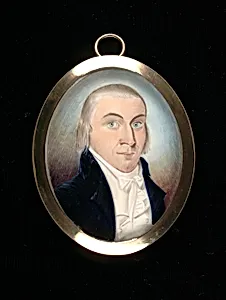
Col. Nathaniel Darby
ca. 1798
Medium
Painting-Miniature
Classification
Painting-Miniature
Department
Smithsonian Collection
Museum
Smithsonian American Art Museum
Credit
Smithsonian American Art Museum, Gift of Natalie Brooks Sears Shippen and William Brush Shippen
Accession Number
1999.87.7A
Rights
Public Domain
Tags
About this artwork
It is not always possible to identify the sitter in a miniature portrait, and research is still being done on some of the works in the Museum’s collection. Miniatures became popular in England during the early 1700s, commissioned by wealthy families on the occasions of births, engagements, weddings, and bereavements. These paintings, elaborately set into lockets or brooches, provided the wearer with a sentimental connection to a loved one. The back of the miniature often revealed a lock of the s...
Art Historical Context
Behold the exquisite miniature portrait of *Col. Nathaniel Darby*, by an unidentified artist around 1798. This bust-length depiction captures the colonel in formal attire, embodying the dignified poise of late 18th-century military gentlemen. Housed in the Smithsonian American Art Museum, exemplifies the delicate artistry of portrait miniatures, small-scale paintings prized for their portability and emotional depth. Miniatures surged in popularity in England from the early 1700s, commissioned by affluent families to commemorate life's milestones—births, engagements, weddings, losses. Often encased in ornate lockets or brooches, they allowed wearers to carry a loved one's likeness close to the heart. The reverse side frequently featured a lock of the sitter's hair, a poignant symbol of affection, commitment, or remembrance. Crafted with fine brushes on ivory or vellum, these works demanded masterful control of light, color, and detail to convey lifelike expression in mere inches. The advent of the daguerreotype in 1839 offered a quicker, more affordable alternative, dimming miniatures' appeal until a revival at the century's turn via the American Society of Miniature Painters. Today, *Col. Nathaniel Darby* invites us to ponder the personal stories woven into such treasures, bridging art and human connection across centuries.
About the Artist
Unidentified ( ) · –