
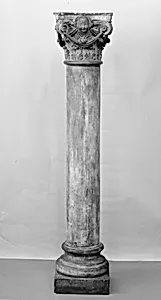
Column (one of a pair)
Unknown Artist
ca. 1500
Medium
Limestone
Dimensions
Height (whole): 60 1/2 in. (153.7 cm); Height (capital): 11 in. (27.9 cm); Height (shaft): 39 1/4 in. (99.7 cm)
Classification
Sculpture-Architectural
Culture
Italian
Department
European Sculpture and Decorative Arts
Museum
Metropolitan Museum of Art, New York, NY
Credit
Gift of George Blumenthal, 1941
Accession Number
41.100.393
Rights
Public Domain
Art Historical Context
This elegant limestone column, one of surviving pair crafted by an unknown Italian artist around 1500, stands as a testament to the Renaissance revival of classical architecture. Measuring 60½ inches tall, with a distinct 11-inch capital atop a 39¼-inch, it exemplifies the period's obsession with proportion and harmony, drawing directly from ancient Roman precedents like the Corinthian or Ionic orders. Displayed in the Metropolitan Museum Art's European Sculpture andative Arts department—thanks to a 1941 gift from George Blumenthal—it invites visitors to imagine its original role supporting a grand palazzo, church portico, or cloister in Renaissance Italy. Carved from durable limestone, a favored medium in central Italy for its workability and weather resistance, the column showcases refined chisel techniques that highlight subtle fluting and ornate capital detailing. During the early 16th century, such architectural sculptures symbolized cultural rebirth, bridging antiquity and modernity as architects like Bramante rediscovered Vitruvius's principles. Though its precise provenance remains a mystery, this artifact captures the era's humanistic ideals—elegance, balance, and enduring strength—offering a tactile link to Italy's golden age of design.