
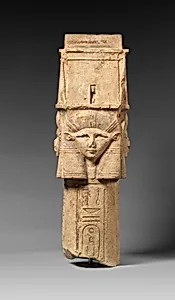
Column with Hathor-emblem capital and names of Nectanebo I on the shaft
Unknown Artist
380–362 B.C.
Medium
Limestone, paint
Dimensions
H. 102 × W. 34.3 × D. 34.3 cm, 169.6 kg (40 3/16 × 13 1/2 × 13 1/2 in., 374 lb.); height with rod: 117.8 cm (46 3/8 in.)
Classification
Column, Hathor-emblem capital, Nectanebo I
Period
Late Period
Department
Egyptian Art
Museum
Metropolitan Museum of Art, New York, NY
Credit
Gift of Edward S. Harkness, 1928
Accession Number
28.9.7
Rights
Public Domain
Tags
Art Historical Context
This striking limestone column, dating to 380–362 B.C., hails from Egypt's Late Period, specifically 30—the final era of native pharaonic rule before Persian conquest. Crafted during the reign of Nectbo I, the founder of this dynasty, it stands as a testament to a brief renaissance of traditional Egyptian artistry and piety. Measuring about 102 cm tall (with rod, 118 cm), its robust form (34.3 cm wide and deep, weighing 170 kg) suggests it once supported a temple or pavilion roof, embodying the monumental architecture of the time. The column's capital features the emblem of Hathor, the beloved goddess of love, music, fertility, and the sky, often depicted with cow horns cradling a sun disk or as a sistrum-shaker. Traces of original paint hint at vibrant colors that once enlivened its surface, a common technique in Egyptian stonework to mimic precious materials and invoke divine presence. Hieroglyphs on the shaft proudly inscribe Nectanebo I's royal names, linking the object directly to his patronage and devotion. As a gift to the Metropolitan Museum of Art from Edward S. Harkness in 1928, this artifact illuminates Dynasty 30's revival of Old Kingdom styles amid political turmoil, showcasing enduring cultural reverence for gods like Hathor in everyday sacred spaces. A window into ancient Egypt's resilient spirit!