
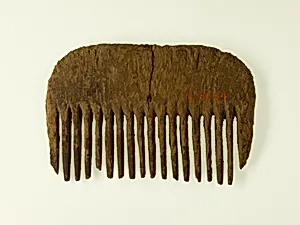
Comb
Unknown Artist
ca. 1295–1070 B.C.
Medium
Wood
Dimensions
L. 6.8 cm (2 11/16 in.); W. 4.3 cm (1 11/16 in.); D. 0.7 cm (1/4 in.)
Classification
Comb
Period
New Kingdom, Ramesside
Department
Egyptian Art
Museum
Metropolitan Museum of Art, New York, NY
Credit
Rogers Fund, 1911
Accession Number
11.151.34
Rights
Public Domain
Tags
Art Historical Context
This delicate wooden comb, dating to around 1295–1070 B.C., hails from Egypt's New Kingdom during the Ramesside period (Dynasties 19–20). This era marked the height of ancient Egypt's power, with pharaohs like Ramesses II leading grand military campaigns and monumental building projects. Everyday objects like this comb offer a glimpse into the personal lives of Egyptians beyond the tombs and temples, revealing a culture that valued grooming and beauty amid its imperial splendor. Crafted from wood—a practical and abundant material—the comb measures just 6.8 cm long, small enough to fit in the palm of your hand. Its fine teeth and smooth handle suggest skilled woodworking techniques typical of the time, where artisans used simple tools to create functional yet elegant items. As a cosmetic tool, it was likely used to detangle wigs or style hair, underscoring the importance of appearance in Egyptian society, from commoners to royalty. Acquired through the Rogers Fund in 1911 and now in the Metropolitan Museum of Art's Egyptian Art department, this unassuming artifact bridges us to the daily rhythms of a bygone civilization, reminding us that even the smallest tools carried cultural weight.