
Commode
ca. 1745–49
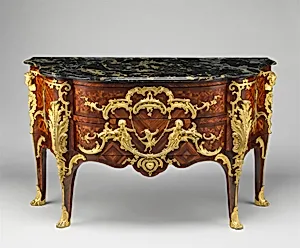
Medium
Pine and oak veneered with amaranth and bois satiné; drawer bottoms of walnut, drawer sides of oak, drawer fronts of pine; gilt-bronze mounts; portoro marble top
Dimensions
34 1/2 x 55 x 22 3/4 in. (87.6 x 139.7 x 57.8cm)
Classification
Woodwork-Furniture
Culture
French, Paris
Department
European Sculpture and Decorative Arts
Museum
Metropolitan Museum of Art, New York, NY
Credit
The Jack and Belle Linsky Collection, 1982
Accession Number
1982.60.56
Rights
Public Domain
Art Historical Context
Step into the lavish world of 18th-century French interiors with this exquisite *Commode* by master cabinetmaker Charles Cressent crafted around 1745–49 in. A hallmark of Louis XV-era luxury, the commode—essentially a wide chest of drawers—was a symbol in aristocratic homes, blending functionality with breathtaking ornamentation. Measuring an impressive 34½ x 55 x 22¾ inches, it served as both storage and a decorative centerpiece, often placed against salon walls. Cressent's genius shines in the construction: a pine and oak carcass veneered with vibrant amaranth and bois satiné for a rich, satiny glow, accented by intricate gilt-bronze mounts that evoke the playful curves of the Rococo style. Drawer bottoms of walnut, sides of oak, and fronts of pine ensure durability, while the portoro marble top—veined in dramatic gold and black—adds a regal finish. These techniques highlight the era's mastery of marquetry and bronzework, transforming humble woods into opulent art. Housed in The Metropolitan Museum of Art's European Sculpture and Decorative Arts Department as part of The Jack and Belle Linsky Collection (1982), this piece exemplifies Parisian craftsmanship at its peak, reflecting the refined tastes of France's Enlightenment elite. A true treasure for admirers of decorative arts!