
Compartmented stamp seal
Unknown Artist
ca. late 3rd–early 2nd millennium BCE
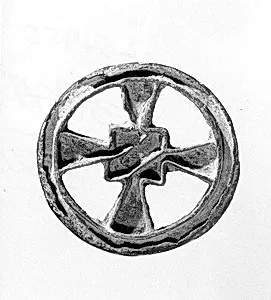
Medium
Copper alloy
Dimensions
1.81 in. (4.6 cm)
Classification
Metalwork-Stamp Seals
Culture & Period
Bactria-Margiana Archaeological Complex · Bronze Age
Department
Ancient Near Eastern Art
Museum
Metropolitan Museum of Art, New York, NY
Credit
Gift of Steven D. Robinson, 1992
Accession Number
1992.149.2
Rights
Public Domain
Art Historical Context
This exquisite compartmented stamp seal, crafted from copper alloy around the late 3rd to early 2nd millennium BCE hails from the Bactria-Margiana Archaeological ComplexBMAC)—a Bronze Age civilization flourishing in Central Asia along the Oxus River (modern-day northern Afghanistan, Turkmenistan, and Uzbekistan). just 1.81 inches (4.6 cm), its petite size belies its practical power as a tool for sealing clay documents, goods, or doors, marking ownership and authority in a bustling network of trade and urban centers. Stamp seals like this one were hallmarks of BMAC society, reflecting advanced administrative systems and artistic ingenuity. The "compartmented" design—divided into distinct sections—likely featured intricate motifs symbolizing animals, deities, or geometric patterns, though worn by time. Forged from copper alloy, it showcases early mastery of metallurgy, blending durability with portability for nomadic traders and settled elites alike. Today, this rare artifact, a 1992 gift to the Metropolitan Museum of Art from Steven D. Robinson, offers a tangible link to a mysterious culture that bridged Mesopotamia and the Indus Valley. Imagine pressing its face into soft clay, imprinting your mark on history!