
Composed Half Armor
Unknown Artist
ca. 1540 and later
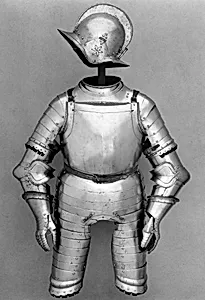
Medium
Steel, copper alloy, leather
Dimensions
Wt. 58 lb. (26.31 kg); Wt. of helmet 4 lb. 3 oz. (1899.4 g)
Classification
Armor for Man-1/2 Armor
Culture
German
Department
Arms and Armor
Museum
Metropolitan Museum of Art, New York, NY
Credit
Gift of William H. Riggs, 1913
Accession Number
14.25.679a–j
Rights
Public Domain
Art Historical Context
Step into the riveting world of 16th-century German warfare with this *Composed Half Armor*, crafted around 1540 and later assembled from expertly made components. Housed in the Metropolitan Museum of Art's Arms and Armor Department, this suit—gifted by collector William H. Riggs in 1913—represents the pinnacle of protective gear for a male warrior, covering the torso, arms, and head while leaving the legs unarmored for mobility in battle. Forged primarily from steel, with accents of copper alloy and practical leather straps, the armor tips the scales at a hefty 58 pounds (26.31 kg), its helmet alone weighing 4 pounds 3 ounces (1,899.4 g). This "composed" construction highlights the modular nature of Renaissance armor, where pieces from different workshops or eras could be combined for customization. German armorers of the time excelled in shaping hardened steel plates through hammering and riveting, balancing brute strength with ergonomic design amid the conflicts of the Holy Roman Empire. Beyond its martial function, this half armor embodies the artistry of the era—where functionality met aesthetic refinement. It evokes the thunder of Landsknecht mercenaries charging into the fray, offering visitors a tangible link to Europe's turbulent Renaissance battlefields.