
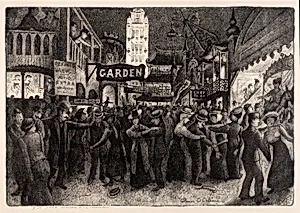
Coney Island
1928
Medium
Graphic Arts-Print
Classification
Graphic Arts-Print
Department
Smithsonian Collection
Museum
Smithsonian American Art Museum
Credit
Smithsonian American Art Museum, Museum purchase
Accession Number
1982.94
Rights
Public Domain
Tags
Art Historical Context
Glenn O. Coleman's *Coney Island* (1928) is a lively graphic arts print that captures the electric energy of New York City's iconic amusement destination during the Roaring Twenties. Acquired through museum purchase and now housed in the Smithsonian American Art Museum's collection, this work depicts a bustling scene of recreation, featuring figure groups amid carnival signs and attractions. As a print medium, it exemplifies the era's advancements in graphic reproduction, allowing artists to disseminate vivid urban snapshots to wide audiences with sharp lines and dynamic contrasts. Created at the height of Coney Island's golden age, when millions flocked to its beaches, roller coasters, and midway games as an escape from city life, Coleman's piece reflects the cultural allure of mass leisure in interwar America. The tags of "recreation," "carnival," and "New York" evoke the sensory overload of hot dogs, barkers, and laughter—a symbol of democratic fun for working-class families. This print's artistic significance lies in its ability to freeze a fleeting moment of joy, using the precision of graphic arts to highlight human connection amid spectacle. Visitors today can appreciate how Coleman immortalized Coney Island's role as a vibrant hub of American pop culture.