
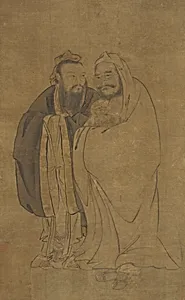
Confucius and Buddha Cradling a Qilin
Classification
Painting
Department
Smithsonian Collection
Museum
Smithsonian American Art Museum
Credit
Gift of Charles Lang Freer
Accession Number
F1916.73
Rights
Public Domain
Tags
About this artwork
Zhe School
Art Historical Context
Behold *Confucius and Buddhaadling a Qilin*, a captivating 15th-century Chinese painting the Ming dynasty (1368–1644). This rare work depicts two towering figures of Eastern philosophy—Confucius, the sage of ethics and governance, and Buddha, the teacher—gently cradling a qilin, a mythical beast symbolizing prosperity, benevolence, and good omens. Such syncretic imagery beautifully reflects the Ming era's cultural blending of Confucianism and Buddhism, harmonizing spiritual traditions in a single auspicious scene. Formerly attributed to the legendary Tang dynasty artist Wu Daozi (active ca. 710–760), renowned for his dynamic ink paintings, this piece is now associated with the Zhe School. This professional Ming painting group, originating from Zhejiang province, revived earlier Song dynasty styles with bold, expressive brushwork and vivid compositions, often favored by imperial courts. Though the medium remains unidentified, its classification as a painting underscores the school's emphasis on narrative depth and symbolic elegance. A cherished gift from collector Charles Lang Freer, it graces the Smithsonian American Art Museum's collection. This artwork invites visitors to ponder the timeless dialogue between wisdom traditions, evoking the qilin's promise of harmony in a turbulent world. (198 words)