
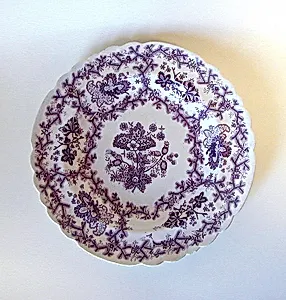
"Coral Border"
mid-19th century
Classification
ceramics
Department
Smithsonian Collection
Museum
Smithsonian American Art Museum
Credit
Gift of Paul F. Walter
Accession Number
2001-25-11
Rights
Public Domain
About this artwork
Research in Progress
Art Historical Context
Enoch Wood (1759–1840), a prominent English potter from Staffordshire, was a master of ceramic production during the late 18th and early 19th centuries. Known for his innovative use of transfer printing on earthenware, Wood's workshop produced vast quantities of affordable, decorative ceramics, many exported to America. "Coral Border," dated to the mid-19th, exemplifies this tradition as a piece from the Smithsonian American Art Museum's ceramics collection, gifted by Paul F. Walter. title suggests a decorative motif featuring coral-like patterns, likely adorning the edge of a plate, dish, or vessel—a common design in English ceramics that evoked exotic seafaring themes popular in the era. Staffordshire potters like Wood capitalized on global trade influences, blending natural forms with intricate borders to enhance everyday tableware's elegance. Though research on this specific piece is ongoing, it reflects the period's shift toward mass-produced yet artistically refined pottery, bridging utilitarian craft and fine art. Wood's legacy endures in American collections, where his wares furnished homes and symbolized transatlantic cultural exchange. Visitors can appreciate how "Coral Border" captures the vibrancy of 19th-century design, inviting us to trace the delicate interplay of pattern and pottery in everyday history.