
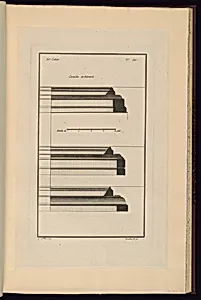
Corniche architravée
Classification
Department
Smithsonian Collection
Museum
Smithsonian American Art Museum
Credit
Purchased for the Museum by the Advisory Council
Accession Number
1921-6-254-26
Rights
Public Domain
About this artwork
Research in Progress
Art Historical Context
**Corniche Architravée** *Juste-François BoucherFrench, 1736–1782), ca. 1775 Print; Smithsonian American Art Museum, Purchased for the Museum by the Advisory Council Juste-François Boucher, of the renowned Rococo François Boucher, was a skilled French engraver active during the late 18th century. around 1775, *Corniche Architrav*—translating to "Corniced Architrave"—exemplifies the period's fascination with classical architecture amid the shift from ornate Rococo to emerging Neoclassicism. part of the Smithsonian American Art Museum's collection, this print highlights the transatlantic exchange of artistic ideas, bridging European design traditions with American collections. Though the precise medium remains under research, its classification as a print underscores a key innovation of the era: the ability to reproduce intricate designs affordably. Prints like this allowed architects, decorators, and craftsmen to study and replicate sophisticated moldings and entablatures, essential elements in grand interiors and facades. Boucher's technical precision captures the elegant interplay of projecting cornices and supporting architraves, evoking the grandeur of ancient Roman and Renaissance architecture revived in Enlightenment France. This work invites visitors to appreciate how such detailed engravings fueled the decorative arts, influencing everything from Parisian salons to early American buildings. Ongoing research promises deeper insights into its creation and context, enriching our understanding of 18th-century printmaking's cultural legacy. (198 words)