
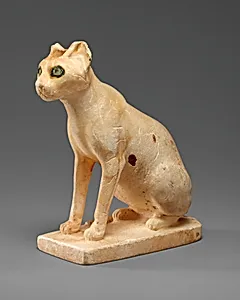
Cosmetic Vessel in the Shape of a Cat
Unknown Artist
ca. 1990–1900 B.C.
Medium
Travertine (Egyptian alabaster), copper, quartz crystal, paint
Dimensions
h. 14 (5 1/2 in.); l. 13.7 cm (5 3/8 in.); w. 6.2 cm (2 7/16 in.)
Classification
Vessel, cat
Period
Middle Kingdom
Department
Egyptian Art
Museum
Metropolitan Museum of Art, New York, NY
Credit
Purchase, Lila Acheson Wallace Gift, 1990
Accession Number
1990.59.1
Rights
Public Domain
Tags
About this artwork
This work from Middle Kingdom, Dynasty 12, early, dating to ca. 1990–1900 B.C., provides valuable insight into the artistic practices and material culture of its era. Created in travertine (egyptian alabaster), copper, quartz crystal, paint, this work embodies the material practices and technical knowledge of its era. Artists' choices of materials reflected both practical availability and symbolic associations, with different media carrying distinct cultural meanings and artistic possibilities. ...
Art Historical Context
This elegant cosmetic vessel, crafted around 1990–1900 B.C. during Egypt’s Middle Kingdom, Dynasty 12, takes the form of a seated cat. Measuring just over five inches high, the piece would have held precious ointments or cosmetics, blending everyday utility with artistic refinement. Its unknown creator worked within a period celebrated for renewed stability and artistic excellence following Egypt’s reunification. The vessel is fashioned from luminous travertine, often called Egyptian alabaster, chosen for its translucent beauty and ease of carving. Details such as copper accents, quartz crystal eyes, and traces of paint bring the feline form to life, demonstrating the sophisticated material combinations typical of royal and elite workshops. Such choices reflect both technical mastery and the symbolic value ancient Egyptians placed on durable, radiant stones. Preserved today in the Metropolitan Museum of Art’s Egyptian Art collection, this anonymous work offers a window into Middle Kingdom daily life and artistic traditions. Objects like this reveal how artisans elevated functional items into expressions of cultural values, where even small vessels carried meaning across millennia.