
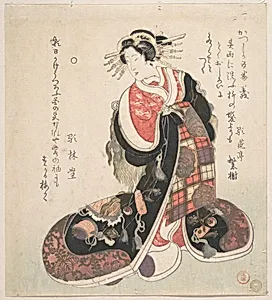
Courtesan Dressed in an Elaborate Gown Embroidered with Emblems of Good Luck
ca. 1800
Medium
Woodblock print (surimono); ink and color on paper
Dimensions
7 7/8 x 7 1/8 in. (20 x 18.1 cm)
Classification
Prints
Culture & Period
Japan · Edo period (1615–1868)
Department
Asian Art
Museum
Metropolitan Museum of Art, New York, NY
Credit
Rogers Fund, 1921
Accession Number
JP1254
Rights
Public Domain
Tags
Art Historical Context
In the vibrant world of Edo-period Japan (1615–1868), Kubo Shunman captures the elegance of a courtesan in woodblock print *Courtesan Dressed an Elaborate G Embroidered with Em of Good Luck* (ca. 1800). This intimate surimono—a deluxe, privately commissioned print often made for special occasions like New Year's—showcases a fashionable beauty adorned in a kimono richly embroidered with auspicious symbols. These emblems, evoking good fortune and prosperity, reflect the era's fascination with bijin-ga, or "pictures of beautiful women," where courtesans symbolized refined pleasure and urban sophistication in cities like Edo (modern Tokyo). Shunman's mastery shines in the meticulous ink and color on paper, employing advanced techniques like embossing and mica dusting for a luxurious shimmer (though specifics here highlight the gown's intricate patterns). Measuring just 7 7/8 x 7 1/8 inches, the print's small scale suited personal gifting, blending poetry, artistry, and celebration. As part of the Metropolitan Museum of Art's Asian Art collection (Rogers Fund, 1921), it offers a window into ukiyo-e's golden age, where everyday luxury intertwined with cultural wishes for luck and harmony.
About the Artist
Kubo Shunman · 1757–1820
Japanese, 1757–1820