
Cover (Furnishing Fabric)
Qing dynasty (1644–1911), 1875/1900
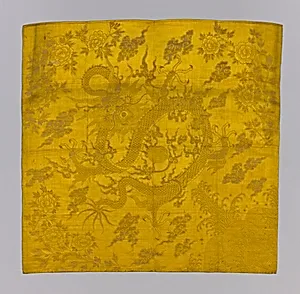
Medium
brocading
Dimensions
109.2 × 112 cm (43 × 44 1/8 in.)
Classification
textile
Department
Textiles
Museum
Art Institute of Chicago
Accession Number
46099
Rights
Public Domain
Art Historical Context
This exquisite *Cover (Furnishing Fabric)* created by Manchu artisans during the Qing dynasty (164–1911) around 1875–1900, exemplifies the pinnacle of imperial Chinese textile artistry. Measuring 109.2 × 112 cm, this square panel was likely designed to adorn furniture in elite households, showcasing the dynasty's love for luxurious, symbolic interiors. The Qing era, ruled by the Manchu people, blended Han Chinese traditions with Manchu influences, producing textiles that conveyed status and harmony with the cosmos. Crafted through brocading—a sophisticated weaving technique where supplementary weft threads are floated across the warp to form raised, shimmering patterns—this fabric highlights the technical mastery of silk weavers. Brocading allowed for intricate motifs in vibrant colors, often featuring dragons, phoenixes, or floral emblems reserved for the imperial court, transforming everyday objects into statements of power and refinement. Housed in the Art Institute of Chicago's Textiles Department, this piece offers a window into late Qing opulence, just before the dynasty's decline amid Western influences and internal strife. Its preservation reveals the enduring cultural value of textiles as portable wealth and artistic expression in Chinese history.
About the Artist
Manchu
"Manchu" is a cultural and ethnic designation used in museum collection records to identify objects, textiles, costumes, and decorative arts associated with the Manchu people, a Tungusic group originating from the regions northeast of the Great Wall of China. The Manchus rose to political dominance in 1644 when they conquered the declining Ming dynasty and established the Qing dynasty, which ruled...