
Uchishiki (Altar Cloth)
Edo period (1615–1868), 1801/25
Medium
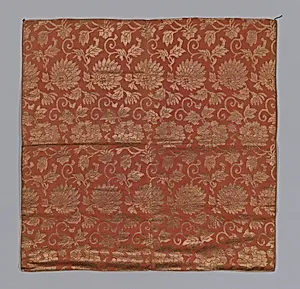
Square piece of kinran, plain compound silk of orange-brown ground with pattern woven in gilded paper strips finely cut, representing chrysanthemum and peony scrolls, lined with white linen
Dimensions
66.7 × 67 cm (26 1/4 × 26 3/8 in.)
Classification
textile
Department
Textiles
Museum
Art Institute of Chicago
Accession Number
11226
Rights
Public Domain
Art Historical Context
Step into the serene world of Edo-period Japan with this exquisite *Uchishiki (Altar Cloth)*, a square textile created around 1801–25. Measuring just over 66 cm on each side, this cloth was designed to adorn Buddhist altars, draping the space before sacred icons to create a reverent backdrop. During the Edo era (1615–1868), a time of relative peace and cultural flourishing under the Tokugawa shogunate, such textiles reflected Japan's mastery of opulent craftsmanship, blending spirituality with everyday devotion in homes and temples. Crafted from kinran—a prestigious plain compound silk with an orange-brown ground—the cloth features intricate patterns of chrysanthemum and peony scrolls woven directly into the fabric using finely cut gilded paper strips. This labor-intensive technique, known as kasumi-ori, mimics shimmering gold threads, lending a luxurious glow that catches the light like temple lanterns. Lined with crisp white linen for durability, the motifs hold deep symbolism: chrysanthemums evoke imperial longevity and autumn elegance, while peonies burst with prosperity and honor, making this piece a poignant emblem of auspicious wishes. Housed in the Art Institute of Chicago's Textiles Department, this anonymous masterpiece showcases the Edo period's textile innovation, where silk and metallic weaves elevated ritual objects into art. A reminder of Japan's harmonious fusion of beauty and belief, it invites us to appreciate the quiet splendor of sacred spaces.
About the Artist
Unknown
The artist designated as "Unknown" in our virtual museum's collection exemplifies a poignant chapter in art history: creators whose identities have faded into obscurity despite the enduring power of their work. With only one known artwork attributed to them in our holdings, this figure represents countless anonymous hands that shaped visual culture across centuries. Museums worldwide, including th...