
唐 彩繪陶塔式罐|Covered jar on stand
Unknown Artist
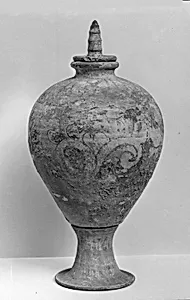
Medium
Earthenware with painted decoration
Dimensions
H. 19 3/4 in. (50.2 cm)
Classification
Ceramics
Culture & Period
China · Tang dynasty (618–907) (?)
Department
Asian Art
Museum
Metropolitan Museum of Art, New York, NY
Credit
Fletcher Fund, 1925
Accession Number
25.227.7a–c
Rights
Public Domain
Art Historical Context
This charming covered jar on a stand, known as a *ta shi guan* or "tower-style jar," exemplifies the vibrant ceramic artistry of China's Tang dynasty (618– CE), though its precise dating remains uncertain. Standing at 19¾ inches (50.2 cm) tall, its multi-tiered, pagoda-like form evokes architectural grandeur of Tang-era temples and towers, blending functionality with aesthetic delight. Acquired through the Fletcher Fund in 5, it now graces the Metropolitan Museum of Art's Asian Art collection. Crafted from earthenware with colorful painted decorations, the jar highlights Tang potters' innovative use of mineral pigments applied before low-temperature firing. Unlike the dynasty's famous lead-glazed sancai wares, this piece relies on overglaze painting for its vivid hues—likely reds, greens, and blacks—creating lively patterns that captured the era's cosmopolitan spirit, influenced by Silk Road trade. During the Tang golden age of poetry, Buddhism, and international exchange, such vessels served practical purposes like storing spices or cosmetics while doubling as status symbols in elite households or tombs. Its bold design and preserved decoration offer a window into the playful, prosperous world of medieval China, inviting visitors to marvel at the enduring allure of ancient ingenuity.