
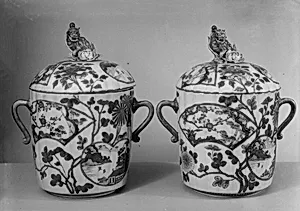
Covered pot
Unknown Artist
19th century
Medium
Decoration of blue under the glaze and colored enamels (Arita ware, Imari type)
Dimensions
H. 12 1/2 in. (31.8 cm); Diam. 7 1/2 in. (19.1 cm)
Classification
Ceramics
Culture
Japan
Department
Asian Art
Museum
Metropolitan Museum of Art, New York, NY
Credit
Bequest of Annie C. Kane, 1926
Accession Number
26.260.2a, b
Rights
Public Domain
Tags
Art Historical Context
This elegant covered pot from 19th-century Japan exemplifies the masterful porcelain traditions of Arita ware, the vibrant Imari type. Produced in the kilns of Saga Prefecture, these pieces were renowned for their export appeal to Europe and America, blending technical innovation with bold aesthetics. Standing at 12½ inches tall and 7½ inches in diameter, the pot features intricate decorations in blue underglaze—fired beneath the glassy surface for enduring vibrancy—and colorful overglaze enamels, adding lush reds, greens, and golds. The motifs of peonies and lions burst across its surface, capturing the exuberance of Imari style. Peonies, symbols of wealth, honor, and prosperity in Japanese culture, bloom in lavish clusters, while fierce lions—likely inspired by guardian foo dogs—add a dynamic, protective energy. These designs drew from Chinese influences but were adapted with Japanese flair during the Meiji era, when porcelain production surged to meet global demand. The combination of underglaze blue for depth and enamel for jewel-like highlights showcases the era's advanced ceramic techniques, making Imari pots prized collector's items. Bequeathed to the Metropolitan Museum of Art in 1926 by Annie C. Kane, this pot invites visitors to appreciate Japan's porcelain legacy—a bridge between East and West, where everyday vessels became canvases for cultural storytelling.