
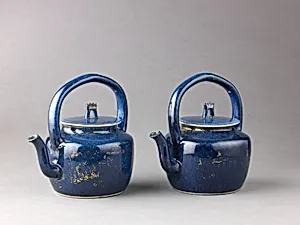
Covered teapot or wine pot (pair with 1975.1.1705)
1662–1722
Medium
Porcelain with "powder-blue" glaze, painted in overglaze gilt.
Dimensions
Height: 5 7/8 in. (15 cm.)
Classification
Ceramics
Culture
Chinese
Department
Robert Lehman Collection
Museum
Metropolitan Museum of Art, New York, NY
Credit
Robert Lehman Collection, 1975
Accession Number
1975.1.1704
Rights
Public Domain
Art Historical Context
This elegant covered teapot or wine pot, crafted in China during the Kangxi period1662–1722) of the Qing dynasty, the pinnacle of imperial porcelain production. Standing at just 5 7/8 inches (15 cm) tall, it features a "powder-blue" glaze soft, misty blue achieved through a meticulous layering of cobalt under a transparent overglaze, then fired to create a velvety texture. Delicate motifs are painted in overglaze gilt, shimmering gold accents that highlight floral or symbolic designs typical of the era. The Kangxi reign marked a golden age for Chinese ceramics, with Jingdezhen kilns producing wares of unparalleled refinement for both domestic elites and export markets. Powder-blue porcelain, inspired by Middle Eastern imports, became a hallmark innovation, blending monochrome subtlety with intricate gilding for a sense of opulent restraint. This piece, likely used for brewing tea or warming wine in refined rituals, reflects the cultural reverence for harmony and hospitality in Qing society. Part of a matched pair in the Robert Lehman Collection at The Metropolitan Museum of Art (acquired 1975), it invites visitors to appreciate the technical mastery and aesthetic poetry of 17th-century China—where everyday vessels doubled as treasures of artistry and status.
About the Artist
Chinese
The artist known simply as "Chinese" in museum records represents the vast tradition of anonymous or unattributed masters in Chinese art history, with 99 works preserved in our collection. These pieces exemplify the enduring legacy of guó huà, or traditional Chinese painting, one of the world's oldest continuous artistic practices. Early life is not well documented, as is common for many practitio...