
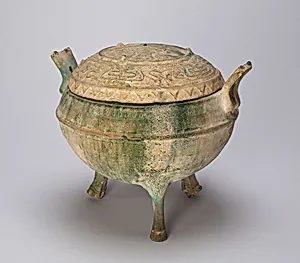
Covered Tripod Caldron (Ding) with Geometric Designs
Eastern Han dynasty (A.D. 25–220)
Medium
Earthenware with lead green glaze
Dimensions
19.1 × 21 cm (7 1/2 × 8 1/4 in.); Diam.: 21 cm (8 1/4 in.)
Classification
ceramics
Department
Arts of Asia
Museum
Art Institute of Chicago
Accession Number
21382
Rights
Public Domain
Art Historical Context
Step into the world of ancient China with this elegant *Covered Tripod CauldronDing)* from the Eastern Han dynasty (.D. 25–220). Crafted from earthenware and coated in a striking lead green glaze, this vessel measures 19.1 × 21 cm, with a diameter of cm. The tripod form—three sturdy legs supporting a rounded body topped by a lid—echoes the bronze ritual ding vessels of earlier dynasties, adapted here for ceramic production. Its surface features bold geometric designs, adding a rhythmic visual appeal that highlights the era's mastery of pattern and symmetry. In Han China, ding cauldrons held profound cultural importance, originally used in ancestral rituals, cooking, and offerings. During the Eastern Han, such glazed earthenware pieces proliferated, especially for tomb furnishings, symbolizing prosperity and continuity in the afterlife. The innovative lead green glaze, a hallmark of Han ceramics, created a luminous, jewel-like sheen through high-temperature firing, paving the way for later celadon wares. This technique not only protected the clay but also imbued the object with an otherworldly glow, evoking jade's preciousness. Housed in the Art Institute of Chicago's Arts of Asia department, this anonymous masterpiece offers a window into everyday luxury and spiritual beliefs of a golden age. Imagine it gracing a noble burial mound, whispering tales of imperial harmony and artistic ingenuity.
About the Artist
Unknown
The artist designated as "Unknown" in our virtual museum's collection exemplifies a poignant chapter in art history: creators whose identities have faded into obscurity despite the enduring power of their work. With only one known artwork attributed to them in our holdings, this figure represents countless anonymous hands that shaped visual culture across centuries. Museums worldwide, including th...