
Covered Tureen
Unknown Artist
late 17th–early 18th century
Medium
Porcelain painted in underglaze blue with gilded biscuit decoration
Dimensions
H. 8 7/8 in. (22.5 cm); W. 7 in. (17.8 cm)
Classification
Ceramics
Culture & Period
China · Qing dynasty (1644–1911), Kangxi period (1662–1722)
Department
Asian Art
Museum
Metropolitan Museum of Art, New York, NY
Credit
Purchase by subscription, 1879
Accession Number
79.2.307a, b
Rights
Public Domain
Tags
Art Historical Context
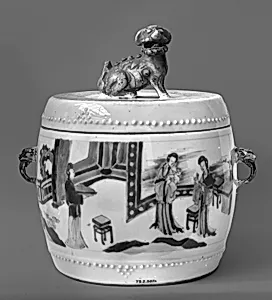
This elegant covered tureen, crafted in China during the Kangxi period1662–1722) of the Qing, exemplifies the pinnacle of porcelain production at Jingdezhen kilns. Standing at 8⅞ inches tall and 7 inches wide this functional yet luxurious serving vessel for soups or stews features a domed lid and bulbous body, painted in vibrant underglaze blue—a technique where cobalt pigment is applied before glazing and fired at high temperatures, embedding color deeply for enduring brilliance. The decoration likely depicts graceful women accompanied by dogs, a motif evoking leisurely domestic scenes popular in elite Qing society, where such pets symbolized refinement and companionship. Adding opulence, gilded biscuit elements—unglazed porcelain accents finished with gold—highlight the piece's status as a high-end export ware, blending functionality with artistry. Kangxi porcelains like this influenced global ceramics, from Europe to Japan, showcasing China's mastery in balancing form, technique, and narrative charm. Acquired by subscription in 1879 for the Metropolitan Museum of Art's Asian Art collection, this tureen offers a window into 17th–18th-century Sino-foreign trade and the era's cultural splendor.