
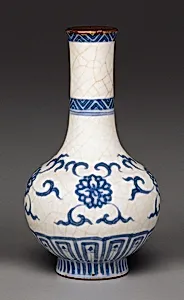
Vase
late 18th century
Medium
porcelain with underglaze blue decoration
Dimensions
overall: 11.7 x 6.6 cm (4 5/8 x 2 5/8 in.)
Classification
Decorative Art
Department
CSD
Museum
National Gallery of Art, Washington, D.C.
Credit
Harry G. Steele Collection, Gift of Grace C. Steele
Accession Number
1972.43.12
Rights
Public Domain
Art Historical Context
This delicate porcelain vase from China's Qing Dynasty (1644–1912), to the late 18th century, exemplifies era's mastery of blue-white ware. Standing just 11.7 x 6.6 cm, its petite scale belies its refined elegance, making it a perfect example of decorative art prized for both domestic display and international export. Produced during the Qianlong or Jiaqing emperor's reign, when imperial kilns at Jingdezhen reached their zenith, such vases were symbols of luxury and sophistication. The medium—porcelain with underglaze blue decoration—highlights a time-honored technique: cobalt pigment applied beneath a transparent glaze before high-temperature firing, yielding vibrant, enduring blues resistant to wear. This method, perfected centuries earlier in the Ming Dynasty, flourished under Qing patronage, blending functionality with artistry. These wares captivated European collectors, fueling the 18th-century chinoiserie craze and shaping global tastes in ceramics. Now in the National Gallery of Art's Harry G. Steele Collection (gift of Grace C. Steele), this vase invites us to appreciate the Qing's cultural legacy: a fusion of technical innovation and aesthetic harmony that bridged East and West.
About the Artist
Chinese Qing Dynasty · 1644–present
"Chinese Qing Dynasty" serves as a collective attribution in museum collections for anonymous artworks produced during China's Qing era (1644–1912), encompassing the works of imperial workshop artisans rather than a single individual. These creators operated primarily from the imperial kilns at Jingdezhen, where potters, painters, and enamellers collaborated under strict court oversight, though sp...