
Covered Vase
Unknown Artist
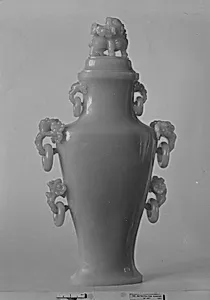
Medium
Nephrite
Dimensions
H. 10 in. (25.4 cm); W. 5 3/4 in. (14.6 cm)
Classification
Jade
Culture & Period
China · Qing dynasty (1644–1911), Qianlong period (1736–95)
Department
Asian Art
Museum
Metropolitan Museum of Art, New York, NY
Credit
Bequest of Edmund C. Converse, 1921
Accession Number
21.175.78a, b
Rights
Public Domain
Tags
Art Historical Context
This exquisite covered vase, crafted from nephrite jade during China's Qianlong period1736–95) within the Qing dynasty (1644–1911), exemplifies the imperial era's mastery of jade carving. Standing inches tall and 5¾ inches wide, its pale green stone—prized for its toughness and translucency—allows for intricate detailing that was a hallmark of the period's royal workshops. Though the artist remains unknown, such pieces were often produced for the emperor's collection, showcasing unparalleled technical skill in hollowing and polishing the dense material. Nephrite, one of two jade types revered in Chinese culture, symbolized purity, immortality, and moral virtue, making it ideal for ritual and decorative objects like this vase. The design likely features mythical creatures—dragons, phoenixes, or chi dragons—common motifs evoking power, protection, and cosmic harmony. During Qianlong's reign, jade production reached its zenith, blending Song dynasty archaism with innovative naturalism, reflecting the emperor's patronage of the arts. Bequeathed to the Metropolitan Museum of Art in 1921 by Edmund C. Converse, this vase invites visitors to appreciate the tactile beauty of jade and its enduring role in Chinese cosmology. Handle with your eyes and marvel at 18th-century ingenuity!